Posts

Showing posts with the label restorative dentistry

White Dental Fillings

Image
A Less Obvious Repair Given a choice, most people want to avoid having repairs visible in their teeth, which is why the standard silver-mercury amalgam filling isn’t always appealing. A metal filling is an acceptable, budget-minded repair, but it’s hard to camouflage against white teeth. Alternative materials have made it possible for us to offer restorations that are a natural-looking white. These composite materials bond to the healthy part of your tooth, reducing the risk of decay in the future. Ask us if this treatment is right for you. Vista Dental Care      Chad Aitken, DMD 280-5201 43 St. Red Deer, AB T4N 1C7 (855) 636-9223    VistaDentalCare.ca

Great Ways to Improve Your Smile # 4

Image
Bonding Not happy with the way your teeth look? Bonding may be the answer. For some, it can help restore the natural look of your teeth. Bonding is a process where the dentist attaches or “bonds” materials directly to your tooth. Your natural tooth enamel and dentin are fused together with bonding materials such as porcelain and resins to create a strong structure that looks great. The above article is from:  MouthHealthy.org Vista Dental Care      Chad Aitken, DMD 280-5201 43 St. Red Deer, AB T4N 1C7 (855) 636-9223    VistaDentalCare.ca
Great Ways to Improve Your Smile # 2

Image
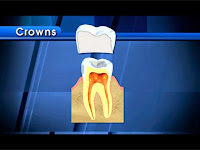
Crowns A crown is a good way to cover teeth that are discolored or badly shaped. A crown can make your tooth stronger and improve its appearance. Crowns can also be used to attach bridges, protect a weak tooth from breaking or restore one that’s already broken. The above article is from:  MouthHealthy.org Vista Dental Care      Chad Aitken, DMD 280-5201 43 St. Red Deer, AB T4N 1C7 (855) 636-9223    VistaDentalCare.ca

Crowns

Image
A crown is a tooth-shaped cover placed over a tooth that is badly damaged or decayed. Many people call it a cap. Crowns may be placed for several reasons. Usually the tooth has been broken or severely damaged by decay. As a result, a filling can't replace enough of the tooth or make the tooth strong enough. A crown may hold together parts of a cracked tooth. It also can be used to hold a bridge in place. Crowns can be used to improve appearance as well. They may be placed to cover misshapen or badly discolored teeth. Crowns can be made ahead of time (prefabricated) or made to order in a laboratory. Prefabricated crowns are made of plastic or stainless steel. They can be used on a temporary basis until a permanent crown is made. Crowns can be made of: All metal Zirconia Porcelain fused to metal (PFM) Porcelain fused to zirconia All ceramic Metals include gold alloy, other alloys (palladium) or a base-metal alloy (nickel or chromium). The all-metal or PFM crowns are st...

Do I Need a Root Canal?

Image
If you have been experiencing problems with a tooth, you may wonder, "Do I need a root canal?" Root canals, also known as endodontic therapy, are performed when the nerve or pulp of the tooth becomes infected and inflammed due to dental decay, a cracked or broken tooth or an injury to the tooth, according to the American Dental Association. During the procedure, a dentist uses a drill to remove both the nerve and pulp and seals up the tooth to protect against further damage. Only your dentist or a dental specialist called an endodontist, can determine whether a root canal will adequately treat your problem. Here are a few possible symptoms of the need for a root canal and some steps for dealing with them. General Possible Symptoms The most common symptom that may indicate the need for a root canal is tooth pain, according to the American Association of Endodontists. The intensity of the pain can range from mild to severe; it may lessen or intensify throughout the day, or ...

Root Canals

Image
Below is an excerpt from an article found on MouthHealthy.org . Root canal treatment is necessary when the pulp (soft tissue inside your teeth containing blood vessels, nerves and connective tissue) becomes inflamed or diseased. During root canal treatment, your dentist or endodontist (a dentist who specializes in treating the insides of teeth) removes the diseased pulp. The pulp chamber and root canal(s) of the tooth are then cleaned and sealed. If the infected pulp is not removed, pain and swelling can result, and your tooth may have to be removed. Causes of an infected pulp could include: a deep cavity repeated dental procedures a cracked or broken tooth injury to the tooth (even if thereís not a visible crack or chip) If you continue to care for your teeth and gums your restored tooth could last a lifetime. However, regular checkups are necessary; a tooth without its nerve can still develop cavities or gum disease. Most of the time, a root canal is a relatively simple ...

Dentures

Image
Below is an excerpt from an article found on MouthHealthy.org . Dentures are removable appliances that can replace missing teeth and help restore your smile. If youíve lost all of your natural teeth, whether from gum disease, tooth decay or injury, replacing missing teeth will benefit your appearance and your health. Thatís because dentures make it easier to eat and speak better than you could without teethóthings that people often take for granted. When you lose all of your teeth, facial muscles can sag, making you look older. Dentures can help fill out the appearance of your face and profile. They can be made to closely resemble your natural teeth so that your appearance does not change much. Dentures may even improve the look of your smile. Types of dentures: Conventional. This full removable denture is made and placed in your mouth after the remaining teeth are removed and tissues have healed, which may take several months. Immediate. This removable denture is inserted on ...